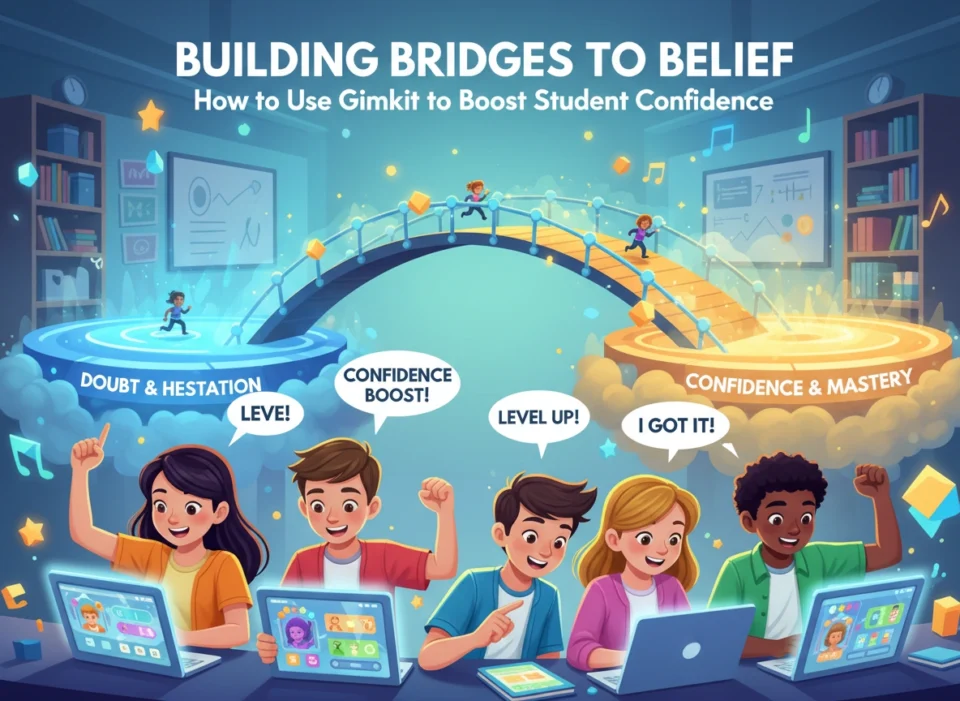
Confidence is a cornerstone of academic success. When students believe in their ability to learn and succeed, they are more engaged, resilient in the face of challenges, and willing to take intellectual risks. However, building this self-assurance can be a significant hurdle in any classroom. Traditional teaching methods sometimes inadvertently create environments where students fear failure, leading to anxiety and a reluctance to participate. This is where innovative educational technology can make a profound difference. Gimkit, a dynamic and engaging game show-style learning platform, offers a powerful solution for educators looking to cultivate a classroom culture where every student feels empowered and confident.
By blending curriculum with a fast-paced, gamified experience, Gimkit transforms review sessions and assessments from high-pressure events into exciting opportunities for growth. Its unique structure, which emphasizes progress and strategy over mere correctness, provides a fertile ground for building student self-esteem. This article will explore the specific features of Gimkit, delve into the psychological benefits of its design, and provide actionable strategies for teachers to integrate this tool effectively, fostering a more confident and capable student body.
Understanding Gimkit: More Than Just a Game
At its core, Gimkit is a live quiz learning game that allows teachers to create or use existing “Kits” (sets of questions) for students to answer on their own devices. What sets it apart from other platforms is its economy-based gameplay. Students earn in-game cash for answering questions correctly, which they can then use to purchase upgrades, power-ups, and strategic advantages. This seemingly simple mechanic has profound implications for student engagement and confidence.
Unlike platforms where a wrong answer is simply a dead end, Gimkit encourages persistence. Students can continue to answer questions, earn cash, and improve their standing. This model shifts the focus from a fear of being wrong to an eagerness to try again. The platform offers various game modes, from the classic “Cash” mode to team-based competitions like “Humans vs. Zombies” and strategic challenges like “The Floor is Lava.” Each mode provides a different dynamic, allowing teachers to tailor the experience to their specific learning objectives and classroom needs. This variety ensures that learning remains fresh and exciting, preventing the monotony that can often accompany review activities.
The Psychology of Confidence-Building Through Gamification
The effectiveness of Gimkit in boosting student confidence is rooted in well-established psychological principles. By incorporating game mechanics, the platform taps into intrinsic motivators that drive human behavior and learning.
1. Mastery Experiences: According to psychologist Albert Bandura’s theory of self-efficacy, the most powerful way to build confidence is through mastery experiences—successfully accomplishing a task. Gimkit creates a low-stakes environment where students can achieve repeated small successes. Each correct answer reinforces their knowledge and provides a tangible reward in the form of in-game cash. This continuous loop of effort and reward builds a sense of competence. The ability to purchase upgrades provides a visible representation of their progress, making their learning journey tangible.
2. Safe Failure and Resilience: One of the greatest barriers to confidence is the fear of failure. In a traditional test, a wrong answer feels final and often comes with a penalty. In Gimkit, a wrong answer might mean a temporary loss of a small amount of in-game cash, but it doesn’t stop the game. Students are immediately presented with another opportunity to answer a question and earn back what they lost. This “safe failure” model teaches resilience. It shows students that setbacks are not catastrophic but are simply part of the learning process, encouraging them to persevere rather than give up.
3. Autonomy and Strategic Choice: Gimkit empowers students by giving them agency over their own game. They decide when to answer questions, when to shop for upgrades, and which power-ups to use. This element of strategic choice makes them active participants in their learning, not just passive recipients of information. When a student’s strategy pays off—for example, buying an upgrade that multiplies their earnings—it validates their decision-making skills, contributing to a broader sense of capability that extends beyond the specific subject matter.
4. Social Learning and Positive Peer Interaction: Many Gimkit modes are collaborative, requiring students to work together toward a common goal. Team modes like “Humans vs. Zombies” or “Capture the Flag” encourage communication, shared strategy, and mutual support. In this context, stronger students naturally help those who are struggling, and every team member’s contribution is valued. This positive social interaction helps to break down classroom cliques and creates a supportive community where students feel comfortable asking for help and celebrating each other’s successes.
Practical Strategies for Implementing Gimkit to Enhance Confidence
Simply using Gimkit is a good start, but intentional implementation can significantly amplify its confidence-boosting effects. Here are specific strategies teachers can employ across various subjects.
Strategy 1: Start with “KitCollab” for Collective Ownership
Before even playing a game, involve students in the creation of the question kit. Gimkit’s “KitCollab” feature allows students to contribute their own questions to a set. This is an excellent way to begin a new unit or review for an assessment.
- Implementation: Assign each student or small group a sub-topic and ask them to write two or three questions with correct and incorrect answers. As the teacher, you can review and approve submissions before the kit is finalized.
- Confidence Boost: This process positions students as experts on their assigned content. When their question appears during the game, it provides a moment of pride and ownership. It also ensures that the questions are phrased in a way that is familiar to them, lowering the initial barrier to participation.
Strategy 2: Leverage Team Modes for Low-Stakes Collaboration
For students who are particularly anxious about individual performance, team-based modes are an ideal starting point. The collective responsibility diffuses the pressure, allowing students to participate without feeling individually exposed.
- Implementation: Use a mode like “Humans vs. Zombies,” where the entire class works together on one of two teams. Frame the activity as a fun, collective challenge rather than a test. You can even create teams that mix students of varying ability levels to encourage peer tutoring.
- Confidence Boost: In a team setting, a student’s individual wrong answer has minimal impact on the team’s overall progress. This frees them from the fear of letting others down. As they contribute correct answers and help their team advance, they build confidence in a supportive environment. The shared victory at the end fosters a sense of belonging and collective achievement.
Strategy 3: Focus on Progress, Not Just the Leaderboard
While the competitive aspect of Gimkit is engaging, an overemphasis on the final leaderboard can be demoralizing for some students. Shift the focus to individual progress and effort.
- Implementation: Before the game, ask students to set a personal goal, such as “earn $1,000” or “answer 10 questions correctly.” After the game, celebrate students who met their personal goals, regardless of their final rank. Gimkit provides post-game reports that show individual data, which you can use to highlight improvement. For example, you can say, “Great job, everyone. I noticed that as a class, we improved our accuracy on questions about fractions from 70% last time to 85% today!”
- Confidence Boost: This approach redefines success. It teaches students that learning is a personal journey of growth, not a race against their peers. When they see their own tangible improvement over time, it provides powerful evidence of their developing skills, which is the very essence of true confidence.
Strategy 4: Use Gimkit for Formative Assessment and Re-teaching
Use the data from a Gimkit game to inform your instruction. The detailed post-game reports show which questions and concepts the class as a whole—and individual students—struggled with.
- Implementation: After a game, review the report. Identify the top 2-3 “toughest questions.” Begin the next class by re-teaching those specific concepts in a new way. You can then play another quick round of Gimkit using only those difficult questions to see if understanding has improved.
- Confidence Boost: This strategy shows students that their mistakes are valuable learning opportunities. Instead of being penalized for not knowing something, they are given immediate support to fill the gap. When they correctly answer a question they previously missed, it creates a powerful “aha” moment that solidifies both the concept and their belief in their ability to learn difficult material.
A Confident Conclusion
In the quest to create classrooms filled with curious and resilient learners, student confidence is not a luxury—it is a necessity. Tools like Gimkit provide a modern, engaging, and psychologically sound method for building this essential attribute. By moving away from a punitive model of right and wrong and embracing a dynamic system of progress, strategy, and safe failure, educators can transform learning into an adventure rather than a trial.
Through intentional strategies that emphasize collaboration, personal growth, and student ownership, teachers can harness the full potential of Gimkit to do more than just review content. They can create an environment where every student feels seen, valued, and capable. When students begin to see themselves as successful learners in the low-stakes world of a game, they are one step closer to carrying that belief into their academic lives and beyond. The clicks and cash earned in Gimkit can translate into the most valuable currency of all: a genuine and lasting confidence in their own abilities.
Please visit the official site for more info.
