Managing weight and blood sugar can feel like an uphill battle. For many people, diet and exercise alone don’t deliver the results they hope for. That’s where newer treatments come in. One name generating real interest is orforglipron, an oral medication that targets the same biological pathways as some of the most talked-about treatments in metabolic health.
But what actually happens inside your body when you take it? Let’s break it down in plain language, step by step.
What Is Orforglipron?
Orforglipron is a GLP-1 receptor agonist. That’s a mouthful, so let’s unpack it.
GLP-1 stands for glucagon-like peptide-1, a natural hormone your gut produces after you eat. A “receptor agonist” is simply a compound that activates a specific receptor in the body—in this case, the GLP-1 receptor. By switching on this receptor, orforglipron mimics the effects of your own GLP-1 hormone.
What sets it apart from many similar treatments is its format. While several GLP-1 medications require injections, orforglipron is taken as a pill. It’s also a non-peptide molecule, which makes it more stable and easier to produce. For people who dislike needles, an oral option is a welcome change.
Meet GLP-1: Your Body’s Natural Regulator
To understand how orforglipron works, you first need to understand GLP-1 itself.
When you eat, your intestines release GLP-1 into your bloodstream. This hormone has several important jobs:
- It tells your pancreas to release insulin when blood sugar rises.
- It slows down how quickly food leaves your stomach.
- It signals your brain that you’re full.
The catch? Natural GLP-1 breaks down in just a few minutes. Your body clears it almost as fast as it makes it. That short lifespan limits its impact, especially for people struggling with appetite control or blood sugar swings.
Orforglipron steps in to extend and amplify these effects. By activating the same receptors over a longer period, it gives your body a stronger, steadier version of a signal it already knows how to use.
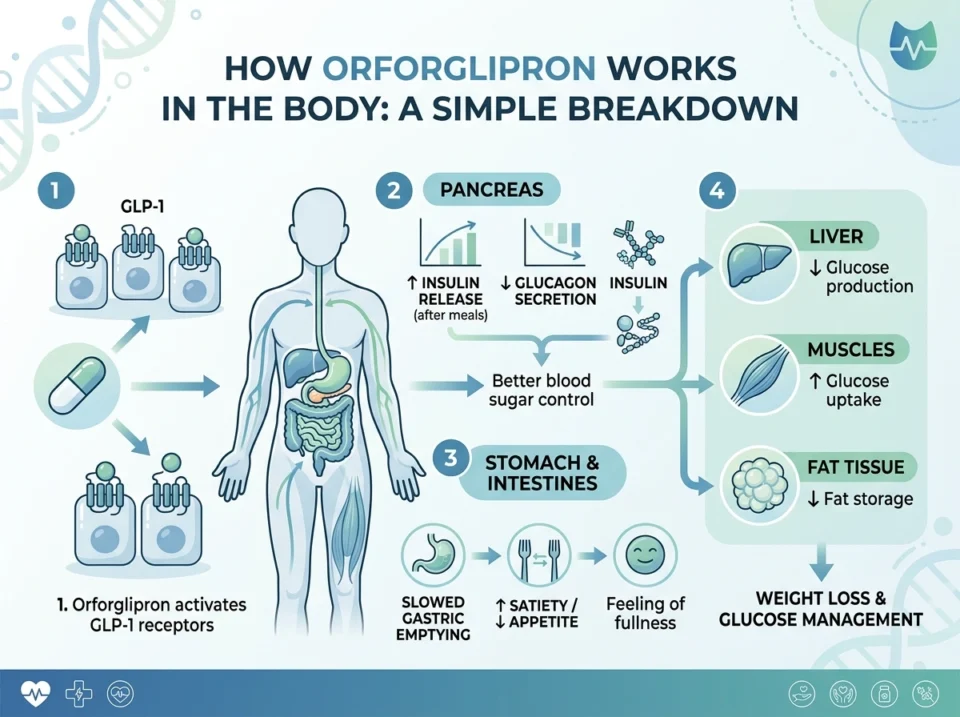
How Orforglipron Interacts With GLP-1 Receptors
Picture your GLP-1 receptors as locks scattered across different organs—your pancreas, stomach, and brain. Your natural GLP-1 hormone is the key, but it slips out of the lock quickly.
Orforglipron acts as a longer-lasting key. It binds to these receptors and keeps them switched on for a much longer time. Because it’s a small, stable molecule, it can be absorbed through the digestive system and still do its job—something many peptide-based drugs can’t manage in pill form.
Once it binds to these receptors, a chain of helpful responses begins across several body systems. Let’s look at each one.
Effect 1: Appetite Suppression
One of the most noticeable effects of orforglipron is reduced hunger.
When the medication activates GLP-1 receptors in your brain—specifically in the hypothalamus, the region that controls appetite—it sends a clear “you’re satisfied” message. This happens even when you’ve eaten less than usual.
At the same time, orforglipron slows gastric emptying. In simple terms, food stays in your stomach longer. You feel full sooner during a meal, and that fullness lasts well after you’ve finished eating.
The result is fewer cravings, smaller portions, and less snacking between meals. For people who find constant hunger to be their biggest obstacle, this effect can be a game-changer.
Effect 2: Blood Sugar Regulation
Orforglipron also plays a powerful role in keeping blood sugar stable, which makes it especially relevant for people with type 2 diabetes.
Here’s how it helps:
It boosts insulin in a smart way. When your blood sugar climbs after a meal, orforglipron encourages your pancreas to release insulin. Insulin moves sugar out of your bloodstream and into your cells for energy. Importantly, this effect is glucose-dependent—meaning the medication only triggers insulin release when blood sugar is actually high. This lowers the risk of blood sugar dropping too low.
It reduces glucagon. Glucagon is a hormone that tells your liver to release stored sugar. Too much of it can push blood sugar higher than you want. Orforglipron helps keep glucagon in check, so your liver doesn’t flood your system with extra glucose.
It slows digestion. Because food and sugar enter your bloodstream more gradually, you avoid the sharp spikes that follow a heavy meal.
Together, these actions create smoother, more predictable blood sugar levels throughout the day.
Effect 3: Weight Management
Weight loss is one of the most sought-after benefits of GLP-1 medications, and orforglipron is no exception.
The weight effects come from a combination of the mechanisms we’ve already covered:
- Lower appetite means you naturally take in fewer calories.
- Slower digestion keeps you feeling full longer.
- Stable blood sugar reduces the energy crashes that often trigger cravings for sugary or high-carb foods.
Over time, eating less without constant willpower battles can lead to steady, meaningful weight loss. Many users find that the medication helps them build healthier eating habits because the biological drive to overeat is finally quieted.
It’s worth noting that orforglipron works best alongside lifestyle changes. A balanced diet and regular movement still matter. The medication doesn’t replace healthy habits—it makes them easier to maintain.
Why the Oral Format Matters
The fact that orforglipron is a pill deserves a closer look. Many effective GLP-1 treatments require weekly injections, which can be a barrier for people who fear needles or struggle with the routine.
A once-daily tablet is simpler. There’s no injection technique to learn, no needles to dispose of, and no special storage requirements like refrigeration. This convenience may help more people stick with treatment over the long term, which is often the key to lasting results.
What to Keep in Mind
Like any medication, orforglipron isn’t free of side effects. Because it slows digestion and affects the gut, some people experience nausea, vomiting, or changes in bowel habits, especially when they first start. These effects often ease as the body adjusts.
Anyone considering this treatment should speak with a healthcare provider first. A doctor can review your medical history, weigh the benefits against the risks, and decide whether it’s a good fit for your needs. This article is for educational purposes and isn’t a substitute for professional medical advice.
The Bottom Line
Orforglipron works by copying and extending the action of a hormone your body already produces—GLP-1. By activating GLP-1 receptors throughout the body, it quiets hunger signals, encourages smart insulin release, controls glucagon, and slows digestion.
The combined effect is better appetite control, steadier blood sugar, and support for healthy weight loss—all from a once-daily pill rather than an injection.
For people facing the daily challenges of metabolic health, understanding how a treatment works can make decisions feel less overwhelming. Orforglipron offers a clear, science-backed approach to a complex problem. As always, partnering with a healthcare professional is the smartest first step toward finding the right path for you.
