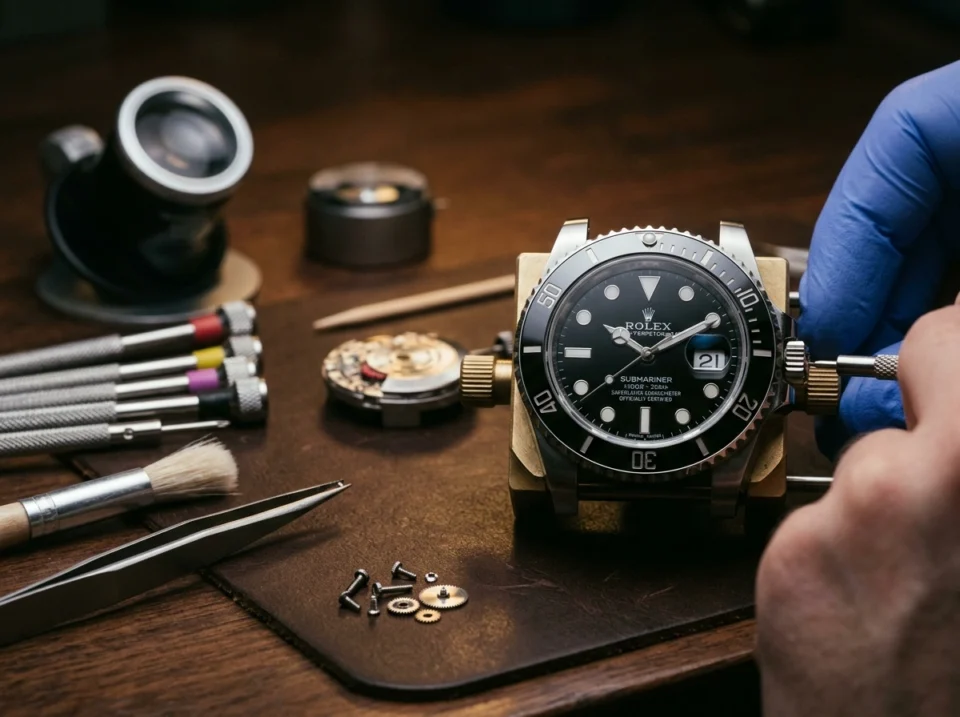
A high-grade replica watch lives or dies by its details. The gap between an obvious fake and a convincing superclone comes down to engineering, materials, and patience on the assembly line. For collectors who appreciate craftsmanship, understanding these elements reveals why some replicas command attention while others fall flat.
This article breaks down the technical work behind a premium superclone Rolex. You’ll learn what separates a careful build from a cheap imitation, and which factors deserve the most scrutiny when you evaluate quality.
What “Superclone” Really Means
The term “superclone” describes replica watches built to mirror genuine references as closely as possible. Unlike entry-level fakes, these pieces aim for accuracy in dimensions, weight, movement behavior, and finishing.
The goal is fidelity. A well-made superclone tries to replicate the feel of the original, not just its appearance in a photo. That ambition demands better tooling, tighter tolerances, and far more quality control than a basic copy.
It’s worth being clear here: replicas are not authentic timepieces, and they hold no investment value. The interest lies purely in craftsmanship and engineering execution.
Materials: The Foundation of a Convincing Build
Material choice shapes everything that follows. Cheap replicas often use lightweight alloys and plated finishes that wear quickly. Higher-grade builds take a different path.
Stainless Steel and Coatings
Quality superclones frequently use 904L or 316L stainless steel, the same grades associated with serious watchmaking. This affects color, polish depth, and corrosion resistance. The way steel catches light, holds a brushed grain, and resists scratching all trace back to the alloy used.
Crystal and Bezel Materials
The crystal is a clear tell. Premium builds use genuine sapphire with anti-reflective coating, which resists scratches and reduces glare. Ceramic bezels matter too—well-made versions feel dense, hold crisp engraving, and won’t fade with sun exposure the way cheaper inserts do.
Gaskets and Seals
Water resistance depends on proper gaskets. While no replica should be trusted in deep water, a careful build still includes seals at the caseback, crown, and crystal to maintain structural integrity and a quality feel.
Movement Replication: The Mechanical Heart
The movement is the most technically demanding part of any superclone, and the area where quality varies most dramatically.
Clone Movements vs. Generic Automatics
Lower-tier replicas rely on generic automatic movements that look nothing like the genuine caliber inside the caseback. The best builds use “clone” movements engineered to mirror the layout, bridge shape, and behavior of the real thing.
A convincing clone movement matches details such as:
- Power reserve duration close to the genuine specification
- Beat rate and rotor movement that feel correct
- Bridge architecture visible through display casebacks
- Date-change timing on relevant models
Why Movement Quality Matters
A watch’s reliability rests on its movement. Smooth winding, accurate timekeeping over a day, and a clean second-hand sweep all reflect how well the caliber was assembled. This is where rushed manufacturing shows itself fastest.
Finishing: Where Skill Becomes Visible
Finishing is the difference between “looks right” and “feels right.” It’s labor-intensive and hard to fake at scale.
Polishing and Brushing
Genuine watches combine mirror-polished and brushed surfaces with sharp transitions between them. On a quality superclone, those transitions are crisp rather than smudged. The polish should be deep and even, without the cloudy look that signals a hurried job.
Engraving and Detailing
Reference numbers, rehaut engraving, and crown logos test a builder’s precision. Clean, evenly spaced engraving suggests careful tooling. Blurry or shallow markings give the piece away immediately.
Weight and Heft: The Honest Test
Weight is one of the simplest yet most revealing quality signals. Genuine watches feel substantial because of dense materials and solid construction.
A well-built superclone uses solid components and proper material density to match that heft. When you hold it, the balance should feel right—not hollow, not toy-like. Many enthusiasts judge a build’s seriousness within seconds of picking it up.
Dial Details: Precision Under the Crystal
The dial sits at eye level, so every flaw shows. This is one of the most scrutinized areas in any build.
Key dial elements include:
- Applied indices that sit cleanly with sharp edges
- Lume application that’s even and glows consistently
- Text printing that’s crisp, correctly spaced, and properly aligned
- Color matching that holds up under different lighting
- Date window alignment centered correctly within the cyclops
On the best builds, the date magnification through the cyclops lens reaches the proper level, a detail that trips up lesser replicas.
Bracelet Construction: Comfort and Durability
A bracelet carries the watch and faces constant flexing, so its build quality affects daily wear directly.
Links and Clasp
Solid links beat hollow ones for both feel and longevity. The clasp deserves close attention—a quality superclone uses a sturdy mechanism with clean stamping, smooth operation, and secure locking. Micro-adjustment systems, where present, should slide and lock without rattle.
End Links and Fit
End links should hug the case with minimal gaps. Tight tolerances here signal careful machining, while loose, rattling end links suggest a cut-rate assembly.
Quality Control: The Final Filter
Even excellent components fail without proper inspection. Reputable builders run timing tests, water-resistance checks, and visual reviews before a piece ships.
Quality control catches:
- Movement timing outside acceptable ranges
- Dial or hand misalignment
- Finishing flaws and dust under the crystal
- Bracelet and clasp defects
For buyers researching this space, dealers who emphasize quality control often discuss their process openly. Some communities and vendors focused on superclone Rolex builds document their inspection steps and grading systems, which gives interested readers a clearer picture of what separates tiers.
Why These Details Matter to Buyers
If you appreciate watchmaking, the craftsmanship story is the real draw. Each factor above—materials, movement, finishing, weight, dial, bracelet, and quality control—stacks together to create the overall impression.
A piece can score well on one front and fail on another. A flawless dial means little if the movement stutters. A great movement disappoints inside a hollow, poorly finished case. The best builds balance every category.
Common Mistakes When Judging Quality
- Trusting photos alone: images hide weight, finishing depth, and movement behavior.
- Ignoring the movement: the caliber matters more than surface looks.
- Overlooking the clasp: it’s a frequent weak point in rushed builds.
- Expecting perfection: no replica is identical to a genuine reference.
A Quick Craftsmanship Checklist
When you assess a build, run through these points:
- Does the steel feel dense and polish look deep?
- Is the sapphire crystal scratch-resistant with proper anti-reflective coating?
- Does the movement wind smoothly with a correct second-hand motion?
- Are the dial text and indices crisp and aligned?
- Does the bracelet feel solid with a secure clasp?
- Did the seller mention any quality control process?
Final Thoughts
The craftsmanship behind a superclone comes down to dozens of small decisions, from alloy selection to final inspection. The most convincing builds reflect genuine engineering effort, while shortcuts reveal themselves through weight, finishing, and movement behavior.
Understanding these elements helps you appreciate the work involved and judge quality with a sharper eye. Whatever draws you to this niche, focus on the details—because in fine watch construction, the details are everything. Use the checklist above as your starting framework, and weigh each factor before forming an opinion.
